Friday, 5 October 2012

Random RPG Generator

During a recent very silly conversation with (inevitably) Dan and Arthur, inspired by random character trait rolling in The Dying Earth, I brought up the idea of an RPG where everything was randomly generated. It's very simple. You just start from scratch, considering and randomly determining each element of the game.

This is a very, very simple version of that. There's plenty of scope for extension; one of the reasons it's still so simple is I got into philosophical quandaries about exactly what category of feature things fell into. Is "mystery" a game genre or sub-genre? Is "sci-fi" a genre or an aesthetic wrapper?

One thing I'd vaguely like to have - but which would be quite a lot of work - is to generate antagonists and approximate goals (or at least, activities) for the game, and have various fields linked so they couldn't produce logically contradictory results. But that would be more work, and maybe a completely random one is more entertaining (and more inspirational). Anyway, have a go and make suggestions. I might expand on it one day.

breakdown

Wednesday, 3 October 2012

Trappery, part six: modern office example

As I mentioned last time, I’d been working on some example situations where traps might conceivably form part of a security strategy. The point here is not to invent traps as such, but to look at where they actually fit in in various settings, with varying cultural and technological backgrounds.

Deloitte Offices Auckland

The Security Chief

Let’s take a real-life example. Jen Erric is head of security at IncCorp, a cutting-edge Newcastle tech company. Life is pretty darned safe here. IncCorp is a substantial commercial organisation with a reasonable budget for security and easy access to guards and non-military tech. They have several security concerns:

Thursday, 27 September 2012

Stat distributions

I wrote this post on PC stats and real life, and thought it was broad enough to cross-link here. It's technically for Call of Cthulhu, but similar patterns will apply in other games.

Saturday, 22 September 2012

No Alien Eyes Are There

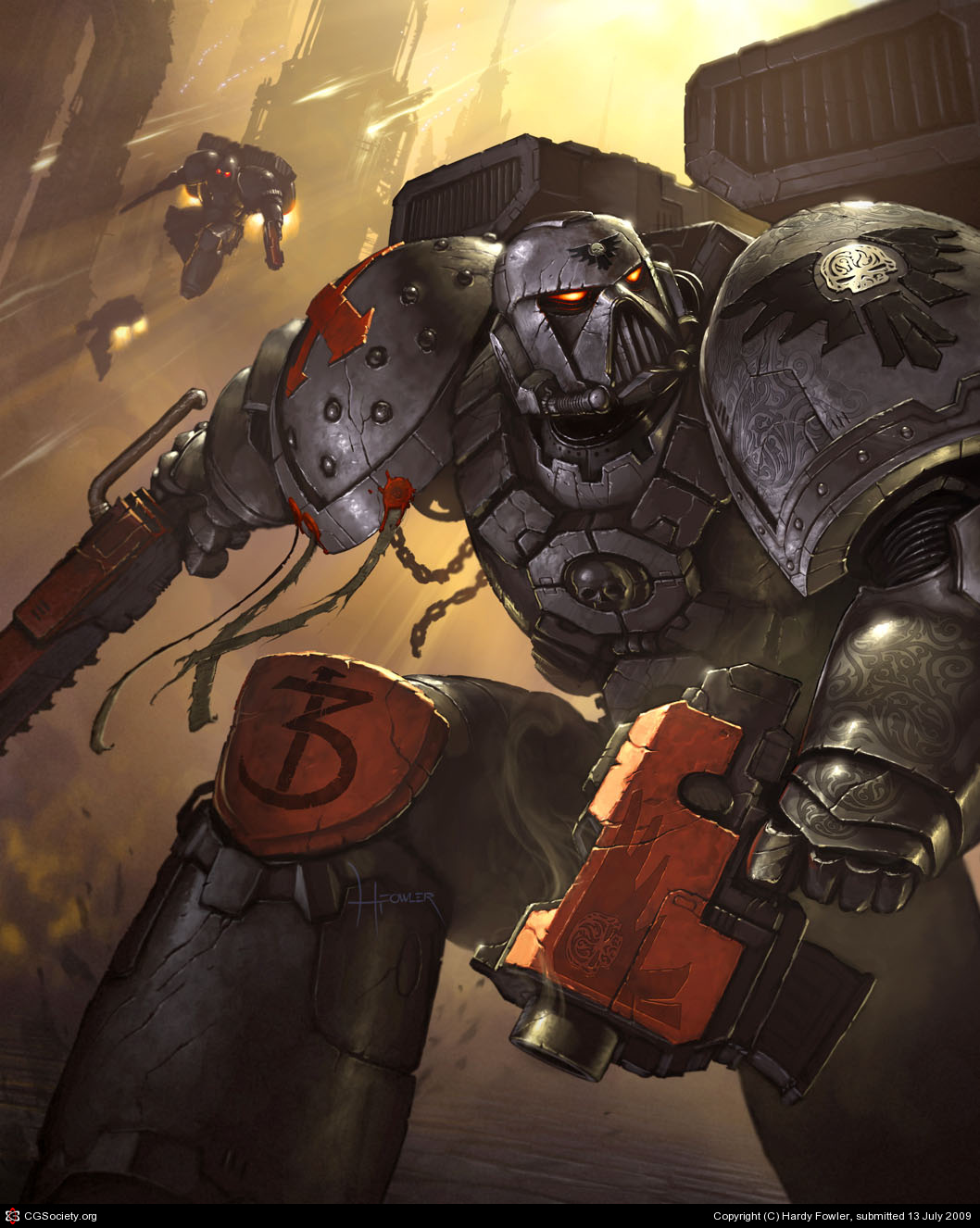
This post will be mostly unintelligible to anyone not familiar with the Warhammer 40,000 universe and associated games. I don’t particularly want to double its length by trying to explain all the references, but I do apologise. You may want to move on.

As one of our friends sometimes remarks, Dan and Arthur and I talk about Warhammer all the time. Okay, the original wording was a little different. In fairness, we had returned to the subject for the fourth or fifth time that day in the brief span of time she’d left the room for. It’s not entirely accurate, but we do spend quite a lot of time discussing the setting, the books and the games. Especially since our recent Deathwatch game, a lot of this energy has gone into discussing the Warhammer 40K RPG line, which is slowly building up. There’s games for playing Imperial Inquisitors rooting out agents of corruption, for playing Space Marines battling xenos horrors, for playing Chaos Space Marines scheming against everyone and plotting the downfall of the Imperium, for playing Rogue Traders making murky deals and looking to the main chance on the fringes of Imperial space, and (most recently) for playing Imperial Guard on the grim battlefields of the 41st Millennium.

So far, there’s been very little sign of the non-human races. That seems a shame. There are some rules for including the odd eldar or even ork in Rogue Trader, but on the whole the humanity of the whole line is staggering. That’s a particular shame because one of the strengths of the 40K setting is the variety of races, all of whom have their own bizarre quirks and lives, and attract different people. For example, I feel a particular affection for eldar (as an old eldar player in the tabletop game) and for orks (who doesn’t?). At the moment, there’s not much scope for people who’d like to follow the adventures of their own chosen species in a more intimate RP game. As it happens, one of the things that left me drifting away from 40K was that the pure tactical basis of the game lost my interest, and I was always wanting to create interesting stories and adventures out of things, which gets a bit difficult when 80% of the army dies each battle and the game fundamentally boils down to reckoning the odds.

We spent a while talking about the chances of them bringing out some xenos (that is, non-human) game lines, and we’re not that optimistic. Broadly speaking, the main difficulty seems to be that the Imperium of Man (and its opposite, the human-based end of Chaos) has received a colossally disproportionate share of attention in terms of worldbuilding.

Now to be fair, there are some good reasons. For one, the Imperium is the main premise of the whole setting, and so needs to be well-established. For another, it’s a sprawling hypocritical mess of squabbling and dubiously-aligned forces with their own agendas, which gives a lot of starting points for fiction and fluff, whereas at least some of the alien races are considerably more unified. For a third, the way it’s built on recognisable elements of human behaviour and cultures (however twisted) has made it relatively straightforward to build on over time, since both the behaviour patterns and the cultural trappings could be extrapolated from reality, whereas trying to create an entire alien society out of whole cloth is a massive undertaking. And for a fourth, it’s really an awful lot easier to write things from the viewpoint of humans that to try and consider this fictional universe as an alien might.

Nevertheless, this has left xenocentric RPGs rather difficult to create. You really need a solid set of character concepts, cultures and general objectives for RPGs to work around, which don’t necessarily fit well into the tabletop model. For example, Dark Heresy and Rogue Trader both have the players taking the roles of Imperial agents who don’t generally appear on the battlefield, but operate at a political and social level. These roles are well-established in the background but have only occasionally had a look-in on the tabletop game. What do you do with races that only really exist in tabletop or as cannon fodder in a human-based novel? What you don’t want is “Orks, the RPG”. It’s simply too generic, without core concepts to shape the sort of person you are or the sort of thing you do. There is prominently no RPG where you are some kind of member of the Imperium and do some stuff. They have niches.

We spent a while discussing the sorts of RPGs you could theoretically create for other races, and we did manage to come up with a few ideas.

Freebooterz

This is a sort of parallel to the Rogue Trader game. You play as ork mercenaries and pirates, sailing the Warp in search of plunder, but not entirely averse to the odd bit of trade. Basically your objectives are to increase the infamy and status of yourselves and your fleet, and in the process to have a good time fighting things that move and smashing or stealing things that don’t. It might borrow from the Imperial Guard’s Only War game, which has buddy mechanics to represent the squad-based nature of IG combat, by having the PCs as squad leaders. Orks even come with built-in classes in the shape of roles like the Mekboy, Mad Dok, Weirdboy, Kommando and Nob.

Eldar Exodites

Elves in spaaaaace! Exodites barely exist in the current canon, but older editions included them as tabletop units, and though I never took any I liked the idea. Lower-tech eldar with a subsistence lifestyle, warrior culture and pet dragons. What’s not to like? This kind of setting is actually considerably easier to imagine than the ultratech of the Craftworlds, with their prophecy-based politics and completely unknown lifestyles. What I’d basically end up doing with this would be something very like D&D in space. Exodite heroes defend their settlements from native and alien threats, explore ruins, and generally achieve awesome with blade and (possibly) spell. It’s a little bit Princess of Mars, a little bit Moorcock, and generally cool.

Harlequins!

The weird and creepy assassin-mimes of eldarity, mixing with both eldar and dark eldar with song and story, guarding secret lore and doing all kinds of really really bizarre and terrifying things. They’re also skilled and powerful individuals with unique technology, perfect for a special agent-type game. Harlequins are a law unto themselves, not allied to any of their race’s powers, and worshipping their own trickster god. It might have a little in common with Dark Heresy - nobody can entirely trust you and nobody is precisely your ally, so paranoia and conspiracy will run rampant. They’re also perhaps the most likely to infiltrate other races with their illusory technology.

Restless Souls

A game of eldar Outcasts. Eldar who can’t take the restrictions of Craftworld life, but aren’t Exodites or inclined that way, wander the galaxy in search of purpose. There’s a lot of individual story potential here, because the deal with Outcasts is their search for personal meaning and their struggle between the poles of conformity, freedom, control, whim, survival and destruction. Failure to control themselves will lead them down the path of decadence, selfishness and hedonism, which ends ultimately in the jaws of Slaanesh. At the same time, Outcasts have a lot of opportunity to do strange things and take on missions from all kinds of people, from joining human rogue trader expeditions to harvesting soulstones in the Eye of Terror for their estranged Craftworlds.

Greater Good

Tau Fire caste warriors are another straightforward example. Their purpose in life is pre-ordained, and so they have a strong common bond much like Space Marines (which works pretty well in Deathwatch). There’s scope for them to have fairly different personalities, while still working well together in pursuit of the Greater Good. This game might work quite a lot like Deathwatch, with the tau taking on mission-appropriate gear and then taking on special missions. They have a range of cool options ranging from standard troopers to infiltrators to full-blown mecha, giving a lot of options for varying playstyle. While tau are perhaps a little too weak for individual fighting, particularly in melee, they could benefit from a buddy-system through either teammates or the ubiquitous battle drones. There’s also the option of complicating matters by introducing the kroot.

Comorragh

Come on, they’re pretty much perfect. They live lives of constant dread, conspiracy and decadence. To be a dark eldar is to plot and scheme, always seeking new ways to consolidate your position and new horrors to perpetuate in the hope of fending off Slaanesh. This could perhaps be a game of intrigue and politics, backed up with treachery and violence. It could also be a spies-and-assassins game with less influence-gathering and more action. The latter would be okay suited for small groups – I feel like the first one could end up best suited to a Vampire-style group LARP.

Dark Eldar Raiders

Forget the constant treacheries of Commoragh for a minute. Killing and enslaving is a genuine way of life for the dark eldar, and a game built around that could be pretty fun. You lead daring raids on outposts and ships, and forge the occasional deal with those aliens foolish enough to believe they can bargain with you. The more powerful the slaves you take, the greater their value, so the game would push for heroic action (well, ‘heroic’ is a fickle word).

Arbitrator

While there’s already a lot of Imperial games, I’d also love to see systems for playing Arbites (the Judge Dredds of the 40K universe). It’d be a mix of investigative gameplay and combat. Arbites handle everything from ordinary crime to treachery to the first waves of alien invasion, and they’re human enough to be a bit more sympathetic than Marines while being a bit tougher than guards. They also have less of the sociopathic amorality of the Inquisition. You could absolutely play them as Dreddalikes with very little compassion for the average citizen, but certainly in the setting there’s plenty of backing for a more nuanced portrayal.

Priests of Mars

The Tech-Priests of Mars are also crying out for further investigation. They’re human, yet very far from the rest of the Imperium ideologically and culturally, and to be honest they only retain their position within the Imperium because a schism between the two would destroy both.

There’s got to be more. Those are just the ones I can remember us discussing. If the alien races had more fleshed-out backgrounds, there’d be more hooks to develop games around. It’s a nice thought.

Trappery, part five

In the last issue of Trappery, which was longer ago than I intended, I started thinking about “real-world” factors that affect trap design. As promised, I’ll now have a go at applying these to devise actual traps.

As a reminder, our core questions are:

  • What’s the main objective of the trap?
  • Who or what are the targets of the trap?
  • Who uses the area, and who has authority to bypass or deactivate the trap?
  • How serious is the threat you’re guarding against?
  • How dangerous is your everyday life?
  • Are you military, official, commercial, criminal or a private citizen?
  • What sort of budget and resources are available?
  • How easily can you maintain or inspect the trap?

One other thing to bear in mind. Realistically, you should never be designing “a trap”. Proper security relies on a combination of factors, which may or may not include traps, but in any case work in tandem. In some cases, a trap may be the best solution to a particular security problem, but it’s only part of the system.

Saturday, 15 September 2012

Killing Me Softly, part 3

Last time in KMS, enthused by a moderately interesting start to a new project and a flicker of interest elsewhere, and also by cyborg warlock space lizards, I continued to stumble aimlessly into the tangled morass that is “soft attacks”. By which I mean, of course, attacks that don’t directly deal damage but inflict status conditions or penalties on an enemy.

So far, I’ve mainly discovered that trying to work out alternative systems for this stuff is really freaking hard, that it’s quite difficult to plan mechanics in a general way without a pretty concrete system in mind, and that if I deliberately invent silly RPGs for demonstrative purposes I will be seized with a desire to write and play them, at least if they involve reptiles.

Mostly I’ve been investigating ways to implement a range of effectiveness for successful soft attacks in place of the commonly-implemented binary succeed/fail options, in the hope of making them less swingy and therefore more comfortable for everyone. This project is mostly preliminary research, by which I mean that I come up with ideas and then poke them to see what breaks. Ideas so far have included:

  • Pools of ‘soft hit points’ to monitor variable damage, heading towards a tipping point
  • Stackable penalties to actions, so a better damage roll inflicts a higher penalty
  • Stackable penalties combined wih fixed thresholds at which defined status effects kick in

Common findings seem to include:

  • All systems are fiddlier to track than the binary one
  • Pool-type systems are not very good for modelling immediate and temporary effects
  • Quantitative models can handle damage mitigation and healing easily, and scale easily

The ever-helpful Dan has also pointed out that accumulative soft attacks tend to be less immediately game-changing, which is unwelcome if we’re expecting them to be occasional spice in the soup of hard attacks.

There are a few things I wanted to think about this time, including more possible models, and ways of modelling recovery and resilience.

In which further models are expounded

I think it’s best to get the models out of the way first so the rest of the discussion can include all the options. This is a sort of tick-box model of escalating status effects, which is the one I think might relate to Epic.

Idea: Damage Boxes

In this system, each soft attack type has several thresholds which impose fixed penalties. Let’s stick with our earlier ‘dazzled’, ‘half-blind’ and ‘blind’ example. Each is represented by a box. A successful blinding hit marks off the ‘dazzled’ box. Each subsequent hit marks off another box.

The main problem with this simple approach is that there’s no discrimination between weak and powerful attacks or creatures, so the same scaling problems apply and the same binary problem applies to some extent – three flare pistol hits will totally blind a Robosaur, so GMs will end up taking steps to prevent this working. If, on the other hand, the blindness isn’t that effective against a powerful creature like a Robosaur, then at high levels soft attacks become useless, which is another no-no.

One thing we could do is add damage ranges to each box. Roll damage and compare to the boxes to see how damaging the hit was. Once the hit is resolved, the fixed penalties for the box apply and the exact damage done is no longer relevant. This allows for power differences between weapons, and helps preserve scaling, particularly if the ranges are linked to the target’s resilience.

I decided last article that in Monitors, stats tend to increase through XP accumulation, so it’s reasonable to assume that more powerful creatures (both veteran fighters and dangerous beasts) will have higher stats. Let’s say that an average 1st-level stat is 4 (yes, yes, this contradicts an example in the last article). A fairly simple system would be to have the ‘half-blind’ threshold equal to Reaction and the ‘blind’ threshold equal to 2 x Reaction. Anything lower than the threshold inflicts a ‘dazzled’ status.

Xerxes has got himself into trouble again. After digging too successfully into a corruption case, he runs into a couple of besuited raccoon heavies in a dark multistorey skimmer park. Luckily, his flare pistol is always to hand. Raccoons have Reaction 4. A snap shot inflicts 5 blind on the first raccoon, leaving it staggering in the dark ‘half-blinded’ and out of the fight for now. A shot at the second only inflicts 1 blind, so it’s merely ‘dazzled’. If Xerxes shoots it again, we don’t care what the current penalty is; we just roll to see the result of the next shot.

In a system like this, the GM doesn’t need to track numbers, only statuses. Basically each status is broken down into several levels of severity, which are inflicted according to the damage rolled. It calls for more tracking than binary models, but less than quantitative models. The amount of tracking depends largely on the number of statuses implemented.

What this model doesn’t do is provide any way to stack up soft attacks, which I’d like to investigate.

Idea: Accumulating Damage Boxes

In this adjusted model, each damage box has a damage range as above. However, each subsequent hit becomes more deadly because of the existing damage, so a sustained barrage of soft attacks can be more devastating than the sum of their parts. This makes sense to me: being ensnared in four nets is more problematic than one, repeated loud noises are more likely to leave your ears ringing, and several doses of KO drugs will affect you more severely than one.

We could simply to say that every hit marks off at least one box, regardless of the damage rolled. However, this suffers from the familiar problem of overpower against tough opponents, and I suspect isn’t really worth implementing unless the system involves lots of boxes, so a very large number of soft attacks would be needed to overwhelm tough opponents. For example, a system with ten boxes might be viable, because it would then take a typical PC group of 4 characters more than two rounds of only using soft attacks to completely blind the Robosaur, during which it would have ample opportunity to chomp them, and might already be recovering from the first few hits. However, they might be able to hire ten mercenaries with flare pistols to help out. Basically, the extent of the problem depends on the willingness and ability of players to exploit this loophole, and whether is fits the tone of the game. If you feel that fourteen soldiers with flare pistols should be able to blind a Robosaur with concerted fire, it’s not a problem at all.

A more scalable option is for each ticked box to grant a bonus to future damage rolls; in our example, it might be a bonus equal to the Reaction threshold of the ticked box (so +4), leaving Xerxes rolling 1d6+4 for subsequent attacks on the first raccoon and with a reasonable chance of hitting that 8 blind threshold to completely blind it.

There’s one last model I’d like to look at. Honest. I can stop any time I want.

Idea: Damage Charts

So this is another model that I don’t think will work, but I’m going to look at it in passing. In this system, each soft damage type has a damage chart available, with escalating penalties for higher results. The successful soft attack simply rolls on the chart. More powerful attacks roll a larger die, just like hard attacks.

Here's a sample blinding chart:

  1. Lightly dazzled: -1 penalty to rolls involving vision
  2. Dazzled: -2 penalty to rolls involving vision
  3. Badly dazzled: -4 penalty ro rolls involving vision
  4. Half-blind: -5 penalty to rolls requiring vision; must roll Perception for actions based on vision that normally require no roll, such as reading or identifying creatures
  5. Near-blind: -10 penalty; roll half Perception for vision-based actions
  6. Blind: fail all actions or rolls requiring vision; halve all rolls involving vision

The difficulties here are that in many systems it’s relatively difficult to predict the damage that an attack will roll, and that the variation between low- and high-level damage would make for some very weird charts. For example, a 1st-level Dungeons and Dragons 3rd edition fighter is probably rolling something like 1d8+3 for damage from a decent weapon and a +3 Strength bonus. A critical 20 with a spear might allow her to inflict 3d8+9 damage in a single hit, with perhaps another +2 from magical buffs for a maximum total of 35. However, it’s incredibly rare (about 1 in 10240 attacks) and the average is going to be more like 7, with about one hit in twenty doing around 20 damage. If soft attacks had a similar range, the damage chart would have to handle ordinary blindness within at most a range of 1-20 while allowing space for amazing results for 35. Bonuses and multipliers stack up as levels increase, making the problem worse: a 10th-level rogue may easily end up rolling 1d6+5 damage normally but 8d6+10 on a critical sneak attack, for a result anywhere from 6 to 58, and that’s without any complex multipliers from spells or magic items.

The scaling problem can be overcome to some extent if we used enemy stats to modify the result.

Captain Ussami is investigating an SOS from a mining factory. She soon finds out the reason when erratic robots begin to attack her. Her disruptor glove inflicts 1d8 stun damage on robots, giving her a roll of 1d8-4 on the damage chart against the standard workers, with a minimum result of 1 (inflicting a -1 penalty to actions) and she manages to battle her way through largely unscathed.

A few months later, the Captain finds herself confronting a complex full of elite security bots. Their improved cogitator units give them Mind 6 and her odds look a lot worse with a 1d8-6 roll. She’ll need to pick up a more powerful weapon to stun these bots reliably.

This model would probably work best with established limits on the damage soft attacks can inflict, as otherwise swinginess will become a problem again. This is likely to be a system where hard attacks also have a fairly limited range of damages, without too many stacking modifiers and multipliers to complicate matters.

Basically I think this idea might be fun in a straightforward system where (again) creatures are fairly similar in power and likely to be making attacks in a fairly similar range, without much in the way of power scaling. As randomness and scaling enter the model, it will become increasingly difficult to create a table that both a) produces satisfactory results for all possible damage rolls; and b) isn’t incredibly bland. Since Monitors is going to involve wildly different creatures across a significant power scale, this isn’t going to be an appropriate system. There’s also the problem that a damage chart with many different results will get fiddly to track. Oh! And as the chart above demonstrates, it's not easy to create a chart that's actually interesting for such a specific damage type, which to me suggests that it's not an improvement on the simpler stacking penalties model (with or without thresholds).

Okay, enough playing. Back to theory. At the start of the article I was wondering about the impact of recovery and resilience modelling on the way soft attacks worked. In the process of the last few examples another point has come to mind, which is the way that severity of effect is modelled. These – like everything else – interact with one another.

But I Get Up Again

As I mentioned previously, the way I envision soft attacks is generally as a sudden and immediate effect that changes the way the target can act, but wears off over time. A flash of light blinds you until your eyes adjust. A drug knocks you out until it works its way out of your system. A layer of gloopy webbing hinders your actions until it’s rubbed off.

I’m aware of three main ways that binary systems handle this recovery, sometimes using more than one in the same game:

  • The effect has a fixed duration or wears off at a specific point, such as the end of combat
  • The effect wears off after a length of time based on the attack (which may be fixed or random)
  • The effect allows a saving throw each round to recover

If we’re using a non-binary system, the options are a bit different. Some I can think of include:

  • *You heal to a random extent each round
  • *You heal a fixed amount each round until you recover
  • *You attempt a recovery roll each round to mitigate your situation, possibly recovering entirely (a slightly more nuanced version of the saving throw).

The other main consideration is what recovery should be based on, which might include ‘nothing’ (it’s invariant), ‘power’ (level) or ‘resilience’ (as compared to equivalent-level critters).

In a very simple model, recovery works exactly the same for every single creature. Fine for some games, but for Monitors? The hyper-metabolism of a Centurian velocibadger allows it to adjust to environmental conditions within seconds, and recover almost instantly from overstimulation or chemical attack. Obviously, that one example can be handled with a special rule; but in a system with wildly variable entities, having their capabilities reflected smoothly by the models seems like a good goal.

The two major options seem to me to boil down to how you want resilience represented in recovery. Should it make you recover damage more rapidly on average (a larger fixed amount or a larger die roll), or should it give you a better chance of recovering each round (a better chance of success on a roll to recover a standard amount)? These choices will tie in to the model you choose. Rapid recovery makes sense with quantitative models that allow fine control. Probable recovery makes sense with models using discrete categories of penalty.

Example: Recovery speeds

Our beta for Monitors is testing the stacking penalties model. Xerxes’ trusty magnesium bomb lands squarely in a cluster of Tetulan porcupinoids and their war-squid, inflicting 20 blind on each (thanks to a set of fluke rolls). The porcupinoids recover 5 blind at the end of each round, so it will be the fifth round before they can act normally and for at least three they will be basically useless. However, the hardy squid recovers 10 blind each round, so it has only two rounds of penalties to endure.

Example: Recovery probabilities

Another session tests a probability model. The ‘stun’ status has been allocated levels of ‘distracted’, ‘dazed’, ‘stupefied’ and ‘stunned’. Doctor Clymestra’s devastating Invocation of Primal Nightmares wracks the minds of an angry owl mob, leaving them all stunned. Each subsequent round, the owls can roll a d12 against their Mind of 5, and a roll equal to or less than the stat allows them to recover by one level. Amongst the owls, though, is a chessmistress, whose acuity and willpower is represented by a Mind of 9, leaving her far more likely to recover each round. Of course, this model means a ‘stunned’ status always takes at least four rounds to recover from, but then it’s relatively difficult to inflict that status.

A possible tweak to the probabilities model would be to allow a second roll in certain circumstances, from the simple “after any successful roll” to “a natural 1”. This would give a small possibility for a creature to recover totally in any round, especially a very tough one. On the downside, it strikes me as reintroducing swinginess by making the soft attack occasionally very ineffective (though assuming rolls happen at the end of the creature’s turn, it would still be stunned for one round), which could be annoying when it’s very difficult to stun creatures with a high Mind in the first place. While there’s room for specific creatures in a game that are both very tough and recover rapidly, such as those with high Armour and regeneration or healing powers, I’m not that comfortable with having that combination an intrinsic part of the ruleset.

Let’s go back a couple of steps. In that simpler model, with no variation in recovery rates, resilience is only taken into account when establishing the initial damage. This might actually fit better with the way hard damage resilience works: high Toughness-equivalent tends to increase the number of hit points you have, but not how much damage you heal compared to the next lizard. If we used that kind of model, everyone would recover at the same rate; in a probabilities model, this would be a fixed roll, such as 4+ on a d6.

Example: Static recovery

A veteran bionic mole commando and a sheep politician are attacked by newt kidnappers en route to a crucial trade meeting, starting with a stun grenade. The neural scrambling leaves the politician stunned, but only dazes the hardy commando. Regardless what method is used to track recovery, both recover at the same rate. This means the politician will be out of action for about twice as many rounds as the commando.

I think the decision between systems mostly boils down to whether you want resilience to model how badly you are affected, how quickly you recover from the effects, or both. We’ll also have to consider how we want the severity of a bit to be modelled. But this seems a good point to talk about resilience.

You’re Indestructible

Okay, definitions again. I’ve talked a bit about resilience here before. What I’m talking about here is how difficult a creature is to affect when compared to other creatures. I usually mean in comparison with other creatures of a similar overall power level, but that won’t always hold true.

Sometimes resilience reflects the natural attributes of a creature: thick-skulled rams are more resistant to knockouts than kangaroos, even if both are humble peasants. At other times, it reflects training: a veteran combat mage has a focused mind and is better able to keep mental coherence than a mere apprentice. Often the distinction is less clear-cut: a hulking mammoth marine is both innately hard-headed and trained to stay focused in combat.

There are several ways that resilience gets modelled in games, which relate to the rest of the combat system and often co-exist. I’m going to include physical damage here because I think it’ll be useful. Some examples that spring to mind:

  • Penalties to attack rolls that take opposing stats into account
  • Saving throws against attacks that are increased by a high stat
  • Hit points that are increased by a high Toughness
  • Ability to reroll failed saving throws to avoid an effect
  • Reduction in damage taken from an attack (as in Deathwatch)
  • Mitigation of specific status effects to a lesser version
  • Regeneration of damage each turn
  • A bonus to fixed saving throws taken to recover from status effects (as in 4E D&D).
  • Ability to reroll failed recovery rolls to recover from an effect

The first one models resilience through a change in the attack roll. The next five make the attack less immediately effective. The last three speed up recovery from an attack.

Dungeons and Dragons, for example, uses several of these systems in parallel. High Toughness gives extra hit points to absorb physical damage. Stats modify either (depending on edition) attack rolls or saving throws that determine whether a soft attack is effective. Many creatures have damage reduction that reduces damage taken from attacks. Regeneration is a fairly common ability. More rarely, several abilities can mitigate status effects to a lesser version, or grant bonuses or rerolls to saving throws. In 4E, hardy enemies gain bonuses to the fixed saving throws used to recover from many persistent effects.

There’s always the possibility of special rules for special critters, but we’re interested in the base mechanics. The main way resilience comes in to play in binary soft attack systems is that it increases the die roll needed for an attack to take effect. If we’re looking at other systems, we have other options.

Last time I talked about stacking penalty models, where the damage from a soft attack roll becomes a penalty to the enemy’s actions. Here damage reduction is an obvious way to handle resilience. On the downside, it offers the opportunity for some attacks to inflict no damage; however, the same is true if damage reduction applies to hard attacks. Deathwatch is a prime example of this, with both Toughness and Armour reducing the damage taken. In a system like that, I don’t know that it would bother players too much.

In damage box models, we could apply a similar rule. If we’re rolling for damage, the reduction would help determine what level of penalty applied. If we’re just ticking box after box, it would reduce the number of boxes ticked.

We could also say that resilience affects not how severely the attack hits, but how quickly you recover from it. In this situation, we’d use a stat-based recovery model, whether faster recovery or a better chance of recovery.

You know, as I go on here I’m finding more and more factors that play into this modelling business and interact with each other in complex ways. I’m going to do some thinking about before I go any further. In any case, I’m not really sure whether all this is actually going anywhere.

Saturday, 8 September 2012

Killing Me Softly, part 2

So last post I waffled a bit about non-damaging “soft attacks”. Since then, Dan H has mused a bit more focusedly on the role of actual chance and player beliefs in the use of soft attacks, and on the relationship between soft attacks and health-monitoring systems. They’re good posts, and if you’re at all interested in this topic you should read them, not least because I’ll be deliberately or unconsciously leaning on them from now on.

So what do I want to think about now, in my usual rambling way? Well, last time I said I’d consider whether there are alternative ways to model soft attacks, particularly if they can be usefully modelled as a range in the same way that hard attacks tend to be. Another thing, which has been prompted by Dan’s article, is to consider the point of soft attacks and how we would like them to play out in practice. Since this will affect my views on the first objective, let’s tackle that first. It also ties in to my approach to traps in the other series I sporadically do.

Broadly speaking, I’m inclined to say that soft attacks have mechanical, simulative and narrative origins, or alternatively, you can consider them from those angles.

Soft attacks can have a mechanical role in making battles easier, or sometimes in making them winnable at all. This increases the variety of battles available in the game. They can make it possible to take on very large groups of enemies (by disabling some), very powerful enemies (by reducing their deadliness), very tough enemies (by making them vulnerable) or otherwise deal with some problematic element of a battle. You can sneak into the guarded compound without raising the alarm if your sleeping-gas is successful. You can drug the kraken so it’s lethargic and possible to capture. You can keep up an EMP barrage on the enemy battleship so it can’t get a decent lock on you as you hightail it to the warp gate. From this perspective, we can view the soft attack as a tool that’s part of a tactical puzzle: “how do we succeed at this battle?”, and specifically as a reusable tool that’s part of a fairly standard problem-solving inventory, as opposed to one-off solutions that work for specific battles. As Dan points out in In Summary, point 3 this depends heavily on the genre in question, and the intended tacticality of the combat. Call of Cthulhu doesn’t need these kinds of soft attacks.

Soft attacks can also be seen as a way of modelling plausible options. Players and GMs are creative, and there’s a reasonable chance they’ll try something more complicated than hitting things with glaive-guisarmes. Here, the soft attack exists as a distinct entity from hard attacks because in the context of that game, it doesn’t make sense for it not to work differently. In a game of cunning tricksters, someone will try blinding or deafening or high-gravitating or drugging somebody, and the game needs to reflect the consequences in a way that makes sense to the players. Some soft attacks don’t really fit this view, because they are deliberately added to the game rather than growing organically from the actions of players – spells or unreal tech are common examples that add entirely new soft attacks. Following on from last paragraph, while Dan is right to say from a design point of view that Call of Cthulhu doesn’t need built-in soft attacks, situations can still arise in which it makes sense for an attack to inflict soft damage, partly because it takes a relatively realistic approach. However, for this type of game, it seems best to handle these rare events through ad-hoc judgements (which is how the designers left things) rather than complicate the rules.

Finally, soft attacks can be seen as cool options. It’s cinematic and exciting to dazzle the beast with your torch just as it rears up at you. It’s cool to modify the coffee machine and watch on the CCTV how the whole security team crumple unconscious ten minutes after their break. It’s nice to have options for disabling, restraining or rendering helpless your opponents without having to kill or cripple them, especially in games where you might be dealing with innocents or trying to minimise bloodshed. Similarly, a fight where a monster is blinding the heroes or rendering them delirious can feel tricky and exciting, and quite different from a straight-up hackfest. Here, the soft attack exists because the game is cooler or more interesting that way, regardless of whether the attack itself is realistic or plausible. These depend a lot on the genre and mood of the game in question. In games with a heavily tactical focus, having a variety of attack types that make different battles play out differently can make the game a lot more interesting and increase its longevity.

I’m going to mostly focus on the third aspect of soft attacks. After all, the prompt for writing these posts was that I thought it would be in-character and freakin’ cool for my awesome Space Marine to use exciting exotic grenades to overcome the wiles of vile xenos monstrosities. When I use a soft attack, I want it to have a reasonable chance of doing something, and to affect the capabilities of the target in an interesting way, indirectly contributing to our victory. I’d also like it to sometimes be pretty ineffective, and sometimes rewardingly devastating, just like an ordinary attack; and I think the chances of those should relate to the power of the target and the power of the soft attack. So if I hurl a flash grenade at a horde of gretchin, they should usually all stagger around blindly; if I use the same grenade on a carnifex it should flinch briefly, and I’ll need to turn to a Dreadnought’s actinic photon searchlights to have much effect. But just occasionally it’d be nice for the flash grenade to go off just right and send the carnifex reeling.

Objectives

In the comments to my last post, I described my basic objectives for a soft attack system:

Roughly what I'm hoping to look at is whether there's a way to model soft damage so that:
* the distinction on when to use soft attacks is less "you're a fool not to" vs. "don't waste your time" and they are a generally useful tool in most situations
* soft damage does not disproportionately affect more powerful creatures and cause game balance problems that designers feel obliged to defend against
* the effect of soft attacks is less swingy, so less inclined to make them fall flat in either direction

Dan offered a set of rules, which I think are also well worth shamelessly stealing taking into consideration.

If I had to provide rules for workable Soft Attacks, they would be these:
1. Soft Attacks should not simply provide a way to circumvent the rest of the combat system. An enemy with 250 Hit Points shouldn't go down to a single failed saving throw.
2. Soft Attacks should be of the same level of abstraction as the rest of the game. You shouldn't have rules for called shots in a game with highly abstracted hit points for example (a particularly perplexing feature of the 40K RPGs is the fact that it makes you determine the location of hits in combat, despite the fact that all damage is applied to a global Wounds score).
3. Soft Attacks are only appropriate in games in which combat is a tactical minigame. Call of Cthulhu, for example, doesn't need Soft Attacks.

His first point, I think, ties into mine: soft attacks shouldn’t circumvent the combat system, neither should they be neutered for that very reason; we want them to be a broadly useful tool in most situations. Let’s also add, drawing on his Chance and Credence argument, that players should understand soft attacks to be a generally useful tool. There is certainly a place for specialised niche tools, but I feel that common equipment and abilities shouldn’t be in it.

As to his second point, that also seems sound. A system with very abstract combat may be happy with a “generically impaired” result, or even treating soft damage as hit point loss. Maybe the largely-invulnerable superbeings are just generally ground down by attacks, be it bullets, poison, blinding flashes or sonic booms alike. Games that aren’t really combaty at all may also want to vague that sort of thing; if you’re not modelling physical injury, why model penalties? At the opposite end of the scale, if you have detailed wound models and healing rules, then a generic ‘stunned’ condition may seem too vague.

The third point I’ve already touched on above. Some games don’t need soft attack rules, even if soft damage may sometimes occur.

Let’s firm up those objectives a bit.

  • In a game of tactical combat, soft attacks should be (and be known to be) viable tactical options. In particular, if soft attacks require you to take specific equipment or abilities, players should be rewarded for that choice by having opportunities to use them effectively. Even disregarding questions of optimality, choices tend to reflect things people want to actually appear in the game.
  • Also, soft attacks should be appropriately cool. That doesn’t necessarily mean cooler than hard attacks. They shouldn’t fall flat in narrative terms, either by never working (particularly if that belies their description) or by making combat less satisfying. There’s satisfaction in being so powerful that you can simply freeze all your enemies solid every time, but it will make the combat itself less interesting, which is a problem if the game is supposed to focus on tactical combat.
  • Soft attacks should scale reasonably, so that they have proportionate effects when the power level of the attacker and defender are considered.
  • Soft attacks should have immediate effects that vary either in duration or severity, giving degrees of success similar to the variable hit point damage inflicted by a hard attack. A blow to the head or a dazzling light tends to affect you immediately, and slowly wear off. In this respect they contrast with hard damage, which tends to build up over time towards a state of ‘dead’. This immediacy is an existing feature of soft attacks that I’d like to retain.
  • I should also accept that no system will work for all games, given the issues mentioned above. Let’s assume that we are working with a hit-point-based system involving tactical combat between a wide variety of entities on a sliding power scale. So we’re talking about something that might work for games like D&D or Deathwatch.
  • In terms of monitoring, let’s say we want to model the effects of blinding, stunning and slowing attacks. These nominal effects cover impairment of senses, disorientation and impaired movement. A paralysing spell might stun and slow, a smoke grenade might blind and slow, and so on.
  • The system should readily handle recovery from soft damage. Whether an effect wears off with time or requires active treatment, it should be straightforward to calculate and record the recovery.
  • The system should readily handle creatures who are unusually resistant to soft attacks.

Okay, so now I have to think about the difficult part: actual mechanics. This isn’t entirely my forte, which centres more on tangential waffling and opining. As usual I will probably come up with random ideas and just see what happens.

One observation before I start: status effects can sometimes get very complicated (some iterations of D&D have loads of them and their definitions can be quite fiddly), and I’ve outlined some of the problems with binary soft attacks, but it’s worth noting that binary effects are easy to track. You’re either stunned or not. Keeping things easy to track makes play faster, which is important in tactical games – D&D 4E attracted a lot of criticism for its slow battles. It makes things easier for new players or those who aren’t really into heavy mechanics. It makes post-battle cleanup relatively easy, keeps character sheets fairly simple, and helps minimise confusion if there are breaks in play. It occurs to me that full-blown tactical miniatures games, like Necromunda (the most RPGish one I know) tend to do the same thing with hard damage: they have minimal hit point tracking and a very simple set of injury states to keep the battles flowing.

Oh, wait. Before I start this exercise, it may make things clearer if I have a specific game to model. Any excuse...

In a vast universe of squabbling galaxies, trouble can erupt at any moment: calamities, rebellions, coups, trade disputes, accidental hyperevolution, accidental necromancy, dimensional fluxes, awakening the sleeping armies of the lost Ghkrat, dreams becoming real, enthusiastic postgraduate researchers carelessly building an unstoppable army of invincible robot armchairs – the possibilities are endless. No conventional task force can be assembled in time.

In this unimaginably distant future, heroic teams of spacefaring reptiles maintain the tenuous peace between squabbling mammalian empires. No drifting wreck is too sinister, no jungle world too unexplored, no asteroid belt too pirate-infested for these fearless trouble-shooters. With modern technology and ancient wizardry, they preserve the fragile web of intergalactic civilisation. Only their hardy poikilothermic bodies can survive nanotech implants, arcane infusions and the harshness of intergalactic deepjumps. They are the Monitors.

Our intrepid bands of anthropomorphic armoured cyborg warlock lizards will confront a wide range of troubles, many of them violent. They may have to battle anything from a million-strong sea of rock-grubs, through entire ships full of parasite-possessed parrotfolk, down to a gang of vicious pirate jellyfish or a single giant robot.

Arbitrarily, I’m going to call Monitors a skills-based d20 system, with special abilities and gear tied fairly directly to skill levels, giving substantial scope for scaling. Armour is represented by damage reduction, so sometimes a hit will inflict no damage.

Idea: Soft Hit Points

I’m going to start by looking at this idea, not because I think it’ll work very well (I don’t) but because it’s very obvious, and deliberately ignoring it seems to be passing up a learning opportunity. If a game has hit points as a way of modelling physical health and endurance against hard attacks, why not have an entirely parallel system for modelling soft damage?

In our straw system, let’s assume that a monitor has 5hp per level, and so on for other damage types. At fifth level, the monitor has 25 hit points, 25 blind points, 25 stun points and 25 slow points. A typical attack inflicts 1d6 points of whichever damage type it inflicts.

The first problem is that tracking hit points is a significant amount of book-keeping. I’m not sure that people would welcome having soft points to track as well. Marking that your character is stunned is easy; marking off stun points requires more effort. This problem is directly proportional to the number of different status effects you want to track: if you have ‘blinded’, ‘slowed’ and ‘stunned’ to monitor as well as ‘injured’, you are effectively quadrupling your damage-related book-keeping. On top of that, there’s space to consider – you’re potentially looking at a much bigger character sheet to track all those points. These problems are particularly acute for the GM, who already has tons of information to keep track of. Ten hostile foxfolk marines with different hit point boxes is bad enough, without introducing three types of soft damage to track as well.

You’d also have to decide what the points actually indicate. In most abstract combat systems, it’s only when hit points run out that characters actually suffer any real consequences. So running out of blind points leaves you completely blind. In that case, as blinding attacks are usually much rarer than hard attacks, having blind points equal to your hit points would probably mean never being blinded. You would basically soak up blind points happily until you suddenly went blind. A model like that runs counter to my vision of soft attacks as immediate and temporary.

On the plus side, the system can easily handle resilience by reducing the damage inflicted. A thick-skulled rhinoborg takes half stunning damage, for example.

It can also handle recovery fairly easily, treating it as a parallel to normal healing. You simply recover the appropriate number of soft points in response to treatment or rest. If you want effects to be temporary, the creature may heal a certain number of points every turn. While it’s straightforward, you might well end up losing and regaining soft points constantly, which could get fiddly.

I think I’m fairly happy that this copy-paste system would be unsatisfactory. It requires too much book-keeping, and makes it quite difficult to actually affect somebody with soft attacks.

Lessons learned:

  • In a cumulative system where soft attacks are relatively rare, each attack needs to inflict a relatively higher amount of damage than a comparable hard attack if it’s to be mechanically worthwhile.
  • Point pools building towards a total are not a good way to model immediate effects that wear off gradually.
  • The less information that has to be tracked, the better.
  • Quantitative models can handle both damage mitigation and recovery in a straightforward way.

Idea: Penalty Stacking

The next idea that occurs to me is a simple system of stackable states (ooh, alliteration). This is basically the cumulative inverse of the whittle-away hit point model. Rather than just switching your blind/nonblind status, or deducting 1d6 blind points from a pool, a flare in this system might inflict 1d6 levels of blind on the target. These levels would stack in a simple way and inflict straightforward penalties. For example, blind levels might give a -1 penalty to any skill roll requiring vision, including searching and watching, attacks, first aid, computing, reading and so on and so forth.

This system automatically allows some scaling. A more powerful blinding attack would inflict more blind on the target, giving a higher penalty, so it makes sense for these to be rarer or require a higher level. Similarly, any given attack will be more effective against weak opponents (who have low skill levels) than against strong ones (who have higher skills and can more easily tolerate the penalty). At the same time, it means than any successful attack will have some effect on an enemy regardless of how powerful it is; a -1 penalty might not mean much against a skill of 20, but it’s still a penalty, and a number of such weak attacks can build up to something substantial, just as many weak hard attacks can slowly whittle away hit points.

While it requires some book-keeping, this also seems more straightforward than soft hit points, simply because there are going to be smaller numbers involved.

On the downside, I think a quantitative approach to blinding is less narratively satisfying than a qualitative one. For example, impaired vision should create new difficulties rather than just exacerbating existing ones. Perhaps you should need a roll just to read some text, or see where another person is? Also, some tasks rely on vision more than others – you might be able to cook blindfolded, but guaging an attack on sound alone is very difficult, and tracking a wild animal more or less impossible. We’ll have to accept some arbitrariness for the sake of a working system, but it’d be good to keep that under control.

Just as with the last model, penalty stacking can handle resilience simply by reducing the number of levels inflicted by an attack. A crocodilian spy’s extra eyelids give her blind resistance 3, so she only takes 1d6-3 levels of blinding from a flare.

Recovery is also very simple, as we simply have to alter the level of the penalty. Our crocodilian spy has been dazzled by a laser misfire, giving her blind 8. At the start of her turn, she blinks and recovers to blind 7. The amount of book-keeping needed is likely to be similar to the soft points model, as the numbers still go up and down regularly. On the upside, because the numbers are likely to be smaller, it may be possible to track them using counters or dice. Back on the downside, it’s still much fiddlier than tracking a blind/nonblind binary status.

Lessons learned:

  • Stackable penalties allow immediate effects
  • Stackable penalties allow scalable soft attacks
  • Stackable penalties allow weak attacks to be meaningful against strong opponents
  • Stackable penalties can be fairly easy to handle
  • Numeric penalties may not be enough to make soft damage convincing; qualitative levels may be needed
  • Stackable penalties work well with damage mitigation
  • Stackable penalties are easier to track than hit points, but more difficult than binary statuses

What next?

At this point, it seems to me that stackable penalties offer a lot of advantages, so I think it’s a good jumping-off point for whatever model I try next. However, I do think the skill penalty model is too simplistic and likely to feel unconvincing. If there’s any point in having attacks that blind or deafen or paralyse, even though we’re trying to introduce scaling, at some point they need to feel like the target is unable to see, or to hear, or to move.

The next idea that occurs to me is vaguely inspired by Necromunda, slightly by Hellcats and Hockeysticks, and partly by some other game I genuinely cannot remember. Possibly war machine damage in Epic, bizarrely.

Anyway, the idea I’m considering now is having a stackable range of qualitative conditions that interact with quantitative damage. The D&D 3.5 system of fear does something a bit similar: it ranges from shaken to frightened to panicked.

Idea: Status Thresholds

One option would be to use the stacking model, together with thresholds of effect that are crossed as penalties stack up. For example:

Xerxes the gecko detective is attacked by a pirate, and pulls out his flash pistol to get some breathing space. His first shot inflicts 4 blind on the villainous squirrel, lightly dazzling him. A second shot inflicts a further 3 blind, to a total of 7. Once the blind level reaches 5, a threshold is crossed: ‘dazzled’. Long Tall Nutkin now can’t make out fine detail, including reading, and has to spend pass a perception roll to identify individuals, which makes combat extra difficult, so he fails to hit Xerxes.

A third shot takes Nutkin past the 10 threshold to ‘half-blind’; he can now only make out strong light-dark differences and large motions. It’s very much like operating at night. In this condition, as well as the mechanical -10 penalties, he can’t identify individuals visually, see colour, distinguish targets under normal lighting conditions, read, or make out details of his surroundings, but he can just about manage to stagger away down an alleyway and avoid an oncoming hoverlorry.

Xerxes decides to end matters with a well-aimed magnesium bomb, inflicting another 8 blind and passing the 15 threshold to ‘blind’. Nutkin is now entirely unable to see. He can’t identify anyone or anything visually, orient himself, read, observe anything that’s happening nearby, spot open manholes, or avoid walking into walls. He can attempt to drive, but unless he has the windows open or some other way of getting non-visual signals, he’ll automatically fail. On top of that, he has a -18 penalty to any activity that involves vision, including cooking, defending himself, most conversations, juggling and sorting change. Where there’s no particular failure condition, like eating or navigating through an empty building, he’ll simply be very slow. Unable to work out which direction he's heading, Nutkin stumbles over a dustbin, and he doesn't have the time he'd need to fumble his way to safety by trial and error. Xerxes has him in pawcuffs within moments.

This system calls for the designer to determine thresholds and the effects of crossing them, which may become quite detailed. There’s also the question of static versus relative thresholds.

Static thresholds are simple to track and remember, but don’t scale very well. A low threshold (say 5) allows low-level flash pistols with 1d6 damage to actually affect a target reasonably often, and makes powerful blind attacks very potent; however, as characters increase in level and get more powerful attacks, it becomes trivial to blind equal-level opponents. If the threshold is high (say 20), the flash pistol can only affect low-level opponents with repeated hits, making it basically useless. This system would also make it more or less equally difficult to blind low and high-level targets.

So we’re looking at some kind of relative threshold that reflects the level and resilience of the target to that attack, in the same way that hit points increase with level and Toughness. The details will depend on how exactly the system works. In D&D, with its formal levels and stat increases, a threshold for blinding might be “level + Dexterity modifier”. In Deathwatch, which relies on stats and skills, the threshold might simply be “Perception modifier”. Sadly for tracking, these vary between creatures and characters; on the plus side, they aren’t that difficult to calculate.

Let’s decree arbitrarily that Monitors has no formal levels: characters increase their skills and stats through accumulated XP. Therefore, blind damage is modelled with thresholds based on multiples of the creature’s Reaction stat, since quick-reacting creatures can blind or look away quickly to avoid the worst of the light. A slow-thinking terrapin accountant with Reaction 4 is dazzled at 4, half-blind at 8 and blind at 12, while a hyperactive shrew pickpocket with Reaction 8 needs a hefty 24 damage to blind it – that’ll take repeated flare blasts or some more powerful effect. Similarly, stun damage might come from Toughness and slow damage from Might (stronger creatures can work harder to reduce the effect).

It does occur to me, though, that having soft damage types tied to particular stats for their thresholds could get unconvincing. A psychic stunning attack should perhaps be compared to Mind rather than Toughness, as strong willpower and clear head make it easier to stay focused. Might is fine for overcoming slowness due to entangling vines or increased gravity, but shouldn’t a paralysing poison depend on the creature’s Toughness? Many systems reflect this by having the soft attack target a suitable defensive stat, which works well. Our system can still do this for actual attack rolls, but when it comes to considering the effects of a hit, it’s tied to a specific stat.

Lessons learned:

  • Any threshold-based damage system needs to reflect the target’s attributes in order to preserve scaling, just as physical hit points tend to
  • Defining thresholds and their effects might get quite fiddly; there’s always more you can say
  • If a threshold is based on stats, it probably won’t convincingly model all the attacks that could inflict that kind of damage

Coming up next on Killing Me Softly: soft damage boxes, healing soft damage, natural recovery and modelling resilience. Additional ridiculous reptile antics are also likely.

Thursday, 23 August 2012

Killing Me Softly, part one

I've written and re-written this post about ten times now, rearranging and rephrasing all kinds of things, to the point where I can't even evaluate it any more. So I'm just going to shove it out and hope.

I was planning to work on the next part of Trappery, but a recent game of Deathwatch inspired me with another musable thought and I want to strike while the iron’s hot.

Assault Marine by me, based on this picture.

I played a calculating Assault Marine, tooled up with kit to keep tactical options open, including photon flash grenades, which are used to blind enemies. Those sorts of soft attacks have always appealed to me; I like esoteric bits of kit and options that aren’t just “cause damage” but create an advantage in other ways. As things worked out, I readied a flash grenade several times, but never ended up using it. Quite often, it was because I didn’t think they’d be mechanically effective, rather than because I didn’t want to, and that’s what I want to muse about today.

Soft attacks

Most games with combat feature some kind of non-damaging attack. In my case it was flash grenades, but you might find sneezing powder, hallucinogens, paralysing charms, freeze rays, spiderwebs or slow spells. Instead of causing damage, they penalise the targets, making it difficult for them to harm you or defend themselves, and so making the rest of the fight easier. I’ll refer to these sorts of attacks as soft attacks in the rest of this post, and I’ll refer to stunning, blinding and other such non-damage penalties as status effects. In contrast, hard attacks are those that deal actual damage. Also, I’ll use level to indicate any kind of progressive scale of power from ‘puny inexperienced peasant’ to ‘godlike veteran adventurer’, and the corresponding NPCs and monsters.

Sweeping generalisations ahoy!

Obviously, there’s massive differences between games and I can only make very broad statements based on the arbitrary subset of games I’m thinking about. Some don’t have soft attacks, some may not play out in the way I’m discussing here. They’re not really germane right now.

Soft attacks are a useful and effective addition to simple hack-and-slash combat. They can lock down dangerous targets, disrupt enemy tactics, or help eliminate key threats much faster than brute force alone would allow. In practice, they tend to be either highly effective or completely ineffective, without much middle ground. That’s because soft attacks are mostly a binary option: either they affect the target fully, or they have no effect at all. Soft attacks are quite swingy to use compared with the variable-but-reliable damage inflicted by hard attacks. One is the flashy, dashing and photogenic cavalier; the other is a solid, unassuming middle-aged guard who doesn’t even get a mention in the credits.

From Complete Adventurer and Players' Handbook 3.5 art galleries (C) Wizards of the Coast.

This is mostly down to differences in the mechanics for the two attack types, which I’ll get round to looking at later on. One feature you tend to find is that the more powerful an enemy is, the swingier soft attacks are. This mostly comes down to a combination of the way resilience is modelled, the invariant nature of status effects, and the way powerful enemies are used in games. Against very powerful enemies, soft attacks can become mechanically useless, or deeply suboptimal, but this mechanical reality doesn’t always match up to what logic or drama would suggest. Sometimes the cause is flat-out immunity, and sometimes it’s just very high resilience to soft attacks.

Immunities in general can be interesting and characterful. Eyeless cave-drakes can’t be blinded, robots don’t need to breathe, and water elementals can flow through entangling vines. These make narrative sense, shake up tactics a bit and avoid things getting too predictable. In other cases, immunities seem arbitrary, and largely designed to stop key battles falling flat through skilled or lucky use of soft attacks. ‘Bosses’ in many games (especially computer games) are immune to stunning, sleep, paralysis, nausea, and a whole list of other effects, either through special traits, equipment or magic, and this often seems designed to make the fight pan out as the designers intended.

While immunity to soft attacks is usually deliberate, near-immunity can be a side-effect of creating powerful opponents, an artefact of the way the game models creatures. Resistance to soft attacks often scales with the level of the creature, while above-average statistics also bump up resistance. In Pathfinder, for example, Will saves are based on the creature’s level and its Wisdom statistic; since powerful monsters tend to have high levels and high stats, their Will saves tend to be higher than those of weaker monsters, even when both are intended to challenge the same adventurers. This is part of being ‘more powerful’, in the same way that hit points tend to increase. Resistances based on physical toughness are usually the most strongly affected, since lone powerful opponents tend to be extremely tough (so they last long enough in a fight) even if their other scores are not particularly high.

Monster Power!

It might be useful to clarify what I’m talking about here. Most games (excepting things like Call of Cthulhu) have levels of monster power that correspond roughly to the level of the PCs, so that it’s easy to work out what monsters are suitable opponents at any stage of the PCs’ careers. However, within that band of ‘level-appropriate opponents’ there’s a range of monsters of varying power. Generally speaking, this means there are weak monsters who appear in hordes, middling monsters who appear in groups about equal to the PCs, and powerful monsters who appear individually. Though the overall difficulty of the fight is about the same, one powerful monster is a much more dangerous opponent than one weak monster. This power typically comes from being relatively high-level, but may just be down to higher stats or better equipment. Often it’s a mixture of these three.

Untouchable

As I see it, powerful enemies tend to be very resistant to soft attacks, and this can make the game less convincing or satisfying. More specifically, powerful enemies tend to be disproportionately resistant to soft attacks, if not completely immune. This is sometimes a deliberate design decision to stop a game falling flat when the powerful central villain of the piece fails a saving throw and is frozen solid before it gets a single shot off. At other times, it’s just a consequence of the way the system models resilience.

Case Study: Battling Broodlords

Let’s returning to our Deathwatch game for a minute. Towards the end of the game, we faced off against a genestealer broodlord and its kin. I had a flash grenade ready to throw as soon as any enemies appeared, but by the time it burst out of cover, everything else had been mown down in a hail of bullets and flame, leaving only the broodlord. Quick calculation time. Assuming a successful hit, I’d have to overcome the broodlord’s Toughness, which would be high. Even worse, while I didn’t know the Deathwatch system at all, general experience suggested such a key enemy might be entirely immune to the attack. I also vaguely remember from older editions of tabletop 40K that Tyranids were highly resistant to many soft attacks. So realistically, there was maybe a 10% chance of a successful hit actually affecting the Broodlord and hampering it for a short time. Using a grenade, I’d also only be able to make a single attack.

Alternatively, I could just charge it; I’d get two or three chainsword attacks at 60%, so at least one should hit and inflict some damage even through its armour. There wasn’t really much of a choice. I’d have to spend five rounds grenading the broodlord to have even odds of blinding it, and there’s a real chance it might be unblindable anyway. In five rounds of conventional attacks, I could expect to land at least five hits and inflict maybe 30 wounds, helping my battle-brothers to finish it off faster and with less injury to ourselves. There was really no comparison.

It might just be me, but this is not how I imagine special attacks working. Heroes don’t stand around methodically lobbing grenade after grenade at the beast ripping through their comrades, hoping to get lucky and blind it; they hurl one to get a quick advantage as they charge in, sending it reeling long enough for someone to land a crucial blow.

Because powerful enemies are so difficult to affect with soft attacks, you end up not even trying, because you expect conventional attacks to be more reliable and often more effective. Many soft attacks provide a relatively small benefit to the attacker, such as a small penalty on the target’s dice rolls. This is a worthwhile tradeoff against a couple of hard attacks, but rarely more. Trying out an unreliable tactic against ordinary opponents is one thing, because you’re not taking too much risk; against something very powerful, you want to aim for maximum efficiency because every round they fight is a serious threat, so unless the unreliable tactic will be devastating if it succeeds, it’s not worth the trade-off. It’s particularly not worth trying any tactic that is both unreliable and less effective than hitting things with your sword.

The logical outcome here is that against a broodlord, you don’t bother with realistic use of soft attacks. You either rely on hard attacks, or you spam very powerful soft attacks; although the chances to succeed are slim, if you can beat that 10% chance to paralyse it, the effect will be devastating.

For one thing, this is a bit boring. For another, it's slightly disheartening if you've envisioned your character as a tactical or tricksy sort, and you're either ineffective in major fights, or have to resort to fighting on someone else’s terms. For a third, it goes against the grain of realism, because fights against dangerous opponents are exactly the ones where you should be turning to tactical combat and indirect options to gain every possible advantage. You might go toe-to-toe with a wolf, but if you’re hunting rogue elephants nobody says “no point trying tranquilisers or poison on that tough old brute... I’ll just have to face it mano a mano, pass me a knife”.

Analysing the problem

So as I see it, the problem is that it’s mechanically difficult, and often suboptimal, to use soft attacks against relatively powerful creatures; and that this reduces tactical options and makes the game less interesting. I’m interested in seeing whether this is true, why, and (if so) whether anything could be done to redress the balance, without allowing soft attacks to become too powerful: as I’ll explain later, this is a real danger.

The Sword and the Stun: hard and soft attacks

In many cases, there are significant differences between the ways soft and hard attacks work, which affect the way they’re used. I think the main ones are the mechanics for making the attack, the way the effects of an attack are modelled, the way progression is modelled, and the way resilience is modelled. I’ll be generalising hugely from now on, and your pet system may work differently; for example, not all games involve variable damage from attacks.

Dice (typical role playing game dice)

Mechanics

Both hard and soft attacks usually call for an attack roll to see if the attack is on target, and some systems allow the defender to try and dodge or parry a successful hit. At this point, the mechanics diverge.

Hard attacks tend to go like this:

  1. attack roll
  2. (optional) dodge or parry roll
  3. roll for damage (damage roll)
  4. if the damage inflicted exceeds any damage mitigation*, the defender suffers the difference as damage

*things like Deathwatch Armour or Dungeons and Dragons Damage Reduction or Energy Resistance.

Soft attacks often go like this:

  1. attack roll
  2. (optional) dodge or parry roll
  3. roll to see if the attack is effective (resistance roll)
  4. if the attacker won, the defender suffers a fixed penalty

Unsurprisingly, these different systems produce different results. I’ve knocked out a diagram below, with the width of columns broadly corresponding to probability.

Fifty percent extra unlikely

In the hard attack, there are two pass/fail rolls (attack and dodge) that can negate the attack. The third roll establishes the effect of the attack, which varies from low damage to high damage. In the soft attack, there are three pass/fail rolls (attack, dodge, and resistance) that can negate the attack. The effect of the attack does not vary: it’s a fixed status effect (though see “Tangent: duration rolls” below).

If hard and soft attacks use the same attack and dodge rolls, which is typical, the extra pass/fail roll for resistance means that soft attacks are statistically more likely to be negated. Assuming a simple system and two identical opponents, each of the rolls may be 50%, which means a hard attack has a 25% chance of inflicting a variable amount of harm, while a soft attack has a 12.5% chance of inflicting a fixed penalty. In reality things are rarely so simple, but you get the idea.

This statistical disparity isn’t necessarily a problem. It depends on the relative effectiveness of hard and soft attacks, and the interaction between this and other factors.

Effects: there is no ‘try’ in ‘soft’

While both attacks involve the same number of rolls, the hard attack resolves effectiveness through a variable damage roll. In contrast, the soft attack resolves it through a binary resistance roll. A soft attack either works or it doesn’t, whereas a hard attack can be more or less damaging to the target. The lasrifle inflicts between 1 and 10 points of damage to the target, while the taser stuns it for two rounds if it fails its resilience roll.

Tangent: duration rolls

In reality, soft attacks quite often add a variable dimension by having a roll for (typically) the duration of an effect. The strength of the effect doesn’t vary, though. In these cases, the soft attacks require more rolls than a hard one, and are still more likely to fail outright, as well as allowing the possibility of a low duration roll.

This point attracts my attention most, because it runs contrary to reality. Things like being dazed, blinded, tranquilised or weighed down don’t have an arbitrary threshold. A punch that sends most people reeling may only make a boxer a little dizzy, and give a world champion momentary pause. A tranquiliser that knocks out a dog will leave a horse weak and lethargic, even if it doesn’t bother an elephant. Thick underbrush is a major obstacle to a toddler, a tiring inconvenience to you, and irrelevant to a gorilla. If I’m going to look at changing anything, this right here seems like a good place to start.

Progression: Bigger, better, faster, stronger

Where games include progression, it usually involves a system for increasing the effectiveness of attacks.

Attack rolls tend to scale with your level, but so do dodge rolls (or Armour Class, or whatever else determines the difficulty of landing a blow). Broadly speaking, hitting enemies of your own level is usually about the same difficulty, regardless of the actual level involved. This progression affects soft and hard attacks equally, and so is mostly irrelevant here.

Damage from hard attacks also tends to scale: low-level attacks do less damage than high-level ones. This usually balances with the hit points of level-appropriate enemies, which also scale, so it takes about the same number of combat rounds to kill an opponent regardless of your level. Its main significance is that any given hard attack becomes less effective as the level of the enemy increases, because the damage inflicted is a smaller proportion of their total. However, a successful hit still generally inflicts some damage and contributes to your victory. Thus, the value of a successful hit depends on the relative level of attacker and defender. Stabbing a rat with a dagger is a lot more effective than stabbing a blue whale, but even a whale will drop eventually.

In contrast, the effect of soft attacks is rarely level-dependent (though duration may be influenced by level). Instead, the attacker’s and defender’s levels are reflected in the resistance roll, with a low-level attacker being less likely to win. This usually balances with the resilience of level-appropriate enemies, so the threshold for a resistance roll against an appropriate opponent is about the same regardless of your level. Its main significance is that any given soft attack becomes less effective as the level of the enemy increases, because it will probably be negated by the resistance roll. However, an attack that does overcome resistance is exactly as effective against all enemies, regardless of level. Asleep is asleep, frozen is frozen, blind is blind, be you goblin or titan.

This is very important, because it means that the effectiveness of soft attacks doesn’t depend on the level of the attack. All that matters is winning the resistance roll.

Tangent: high-level enemies

In practice, high-level enemies in some systems have abilities that mitigate the effect of soft attacks, most notably dispel-type powers that help them to remove status effects, which are not generally available to low-level enemies. They may have special senses that limit the effect of blindness, or teleporting powers that make having your shoes tied together less of a problem. So it’s not necessarily “exactly as effective”, but it’s close. High-level enemies may also have healing abilities that mitigate the effects of hard attacks, so hey.

Resilience: Was that supposed to hurt?

Because hard attacks affects hit points while soft attacks inflict penalties, and also because one is variable and the other is binary, they have different ways of accounting for the toughness of the target. Essentially, hard resilience is modelled by reducing the relative effectiveness of a successful attack. In contrast, soft resilience is modelled by reducing the chance of an attack succeeding at all.

Creatures that are entirely immune to hit point damage are vanishingly rare, while effects that mitigate or heal damage are fairly common. Creatures that are immune to specific or all soft attacks are fairly common, while effects that mitigate status effects without entirely negating them are rare.

Again, systems vary. Traveller, Deathwatch and D&D all have damage-reducing defences that can reduce damage down to zero. What this tends to mean is that relatively low-level attacks are ineffective, level-appropriate attacks almost always inflict some damage, and high-level attacks always inflict some damage. It renders creatures immune to the least powerful attacks, while otherwise acting more or less like extra hit points. This does not, in my view, significantly alter the balance between soft and hard attacks.

So what?

Taken together, these things mean that soft and normal attacks work in significantly different ways.

  • A hard attack causes a variable amount of damage. Unusually resilient enemies take relatively less damage. The damage is less effective against higher-level enemies. It is more effective against several weak enemies than one strong enemy, even if their total hit points are equal, because killing enemies prevents them from attacking.
  • A soft attack either works or it doesn’t, and against unusually resilient opponents it is less likely to work. The status effects it imposes affect enemies of any level about equally. It is more effective against one strong enemy than several weak ones, even if their total hit points are equal, because a higher proportion of the enemies are penalised.

Why are those designers so mean to soft attacks?

At this point, you may be thinking: “But Shimmin, that’s not true. Low-level soft attacks aren’t effective against high-level creatures. You already discussed that!” Absolutely. Designers understandably limit the power of soft attacks to deal with these problems. You can’t just stun whatever you like; you have to see if it’s tough enough to resist you, typically with a resistance roll. If the defender wins, then it shrugs the attack off completely. It’s not stunned, just a little disoriented. It’s not asleep, just drowsy. It’s not blind, its eyes are just watering a bit.

Very occasionally, soft attacks impose a lesser version of the status effect if the resistance roll is successful; being dazed instead of stunned in Pathfinder, for example. This seems like a promising line of investigation.

Soft attacks complicate games in various ways, which I suspect is one of the reasons that immunities appear, and also why it’s okay if soft attacks are less likely to succeed. Here are some of them.

  • Soft attacks are particularly dangerous to powerful enemies, as they tend to work alone or in smaller groups. A lone giant that’s frozen in place can quickly be hacked to death, tied up, or showered with other soft attacks until it’s out of the fight for good. In contrast, freezing one of fifty goblins hasn’t helped much.
  • Soft attacks also make power-scaling awkward. Typically, you start off with rusty spoons fighting diseased goblins, and work your way up the hero ladder until you’re battling greater demons with a flaming omniversal railgun that fires angels’ tears and was carved from the fang of the Dragon Queen. As you progress, your early weapons become less and less effective against the enemies you’re facing; there’s no point using that rusty spoon that causes 1d2 damage any more, because it’ll take you a hundred rounds and four real-life hours to kill one opponent. However, as I said above, an attack that stuns one opponent for one round is just as useful against one greater demon as it is against one kobold. If there was no resistance roll, this would allow low-level soft attacks to wreak havoc on high-level enemies, which disrupts the game balance system. Low-level characters who could never defeat a demon by main strength are able to take it down through soft attacks. The balance of the game becomes skewed towards soft attacks.
  • In any game with major physical differences between opponents, realism is also affected: thick-skinned Greater Xrgax Beasts are much more resistant to laser fire and bullets than Lesser Xrgax Pups, but just as easy to knock out with an uppercut..?
  • Low-level attacks are typically more readily available or cheaper to buy than high-level ones. This works for hit-point weapons, whose damage scales readily with level, but not for soft weapons. Without scaling effectiveness, there’d be no reason to buy an expensive 100th-level stun grenade instead of a hundred cheap 1st-level ones. The balance becomes skewed in favour of buying a hundred stun grenades instead of a railgun.

What to do about it?

As I see it, the main problem is that most systems treat status effects as binary. You’re either blind, or you’re not. This makes the difference between “effective” and “ineffective” much greater than for a weapon that rolls low or high damage. A poor sword attack against a powerful enemy might only inflict 1 point of damage, but that's still chipping away at them. In contrast, a poor stun attack achieves nothing, while a good one grants a substantial advantage.

The resistance roll allows creatures to soak up soft damage, just as hit points allow them to soak up hard damage. The difference is that hit points are slowly whittled away by even the puniest attack, while soft attacks have no cumulative effect. It takes twenty hits to whittle down the ogre’s health and force it to surrender, and those hits build on each other in a predictable way. Any individual sleeping charm has a 5% chance of dropping it immediately, and it’s entirely random whether that’s the first, the twentieth or the one-thousandth charm you use.

What I’m wondering is if you could usefully model status effects as a range, which would allow for more flexibility in their impact on targets, making them less of an all-or-nothing proposition. I’d like to make soft attacks, not better overall, but easier to use in a fun and useful way. This might well require a system built around that aim, rather than a superficial tweak. In a future post, I’ll try and see what possibilities there are, and whether it would really be feasible at all.

Friday, 17 August 2012

Trappery, part four

So far in this series, I’ve pondered:

  • What traps are (and come up with “it depends”)
  • How traps tend to work in games (they go off, or don’t; and cause damage, or don’t)
  • Why traps are unsatisfactory (mechanically dull, narratively dull, don’t make sense)
  • What the point is of having traps in real life (alarm, deter invasion, damage morale, covert attack, protect the unguardable)
  • How I’d like traps to affect my game (exciting narrow escapes, interesting problem-solving)
  • Useful functions that traps could perform in RPGs (creating a sense of danger, testing PC competence, encouraging caution, validating playstyles, creating decision points, triggering encounters, complicating encounters, challenging player ingenuity)
  • Possible stages of interaction with a trap (spot, identify, neutralise, survive, aftermath)

Last time I suggested taking a look at trap design, both in reality and in game-mechanical terms. That seems like a good way to take things. Let’s start with real trap design. I’m going to be assuming a roughly real-life setting, but these ideas should be mostly applicable to fantastical settings, and ‘technology’ and ‘magic’ are largely interchangeable.

Wednesday, 1 August 2012

Trappery, part three

Okay, so I’ve thought about:

  • What traps are (and come up with “it depends”)
  • How traps tend to work in games (they go off, or don’t; and cause damage, or don’t)
  • Why traps are unsatisfactory (mechanically dull, narratively dull, don’t make sense)
  • What the point is of having traps in RPGs (increase caution, deplete resources, change balance of fights, add challenge to exploration, create decision points)
  • What the point is of having traps in real life (alarm, deter invasion, damage morale, covert attack, protect the unguardable)
  • How I’d like traps to affect my game (exciting narrow escapes, interesting problem-solving)

At this point I’m not entirely sure where to go next. How about thinking of constructive ways to use traps? Obviously some of this will be rehashing previous points.

Thursday, 26 July 2012

Trappery, part two

So I’ve been wondering about ways to make traps work more effectively. Wait, wait, go back a bit. Why do we even have traps?

What’s the point?

There’s a cynical soundbite out there for how people see traps as working in D&D: “We have to have traps to give the rogue something to do. We have to have a rogue to deal with the traps.” Basically it’s a circle of redundancy. If things really end up like that, it’s clearly a problem.

The first part of the adage is clearly cynicism. The second part is a bit true, though. Traps are built into a lot of prewritten adventures, and a party without a rogue is more or less powerless against them. That seems bad. Other obstacles offer multiple ways to deal with them: at least three classes can do arcane casting, healing, scouting and combat, plus scrolls or potions as get-arounds. Traps pretty much just have rogues.

Wednesday, 11 July 2012

Tomes and Times, part eleven

A quick link to an article on my Call of Cthulhu blog at YSDC. Part 11 (the last) of a series called Tomes and Times about reading rules for Mythos tomes can be found here.